
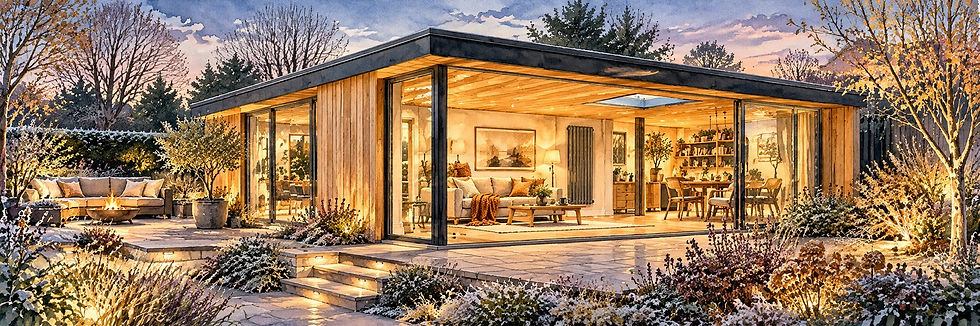
Garden Room Heating
How to Keep a Garden Room Warm and Comfortable All Year
A garden room can be used throughout the year, but only if the heating and insulation are planned properly.
A well insulated garden room should not need excessive heating.
The objective is to create a comfortable internal environment without relying on a powerful heater to compensate for poor construction.
The best heating system depends on:
-
room size
-
insulation
-
glazing
-
intended use
-
how often the room is occupied
-
how quickly it needs to warm up
-
available electrical supply
-
budget
For most garden rooms, electric heating provides the simplest solution.
Heating for Garden Room
Common garden room heating options include:
-
electric panel heaters
-
electric radiators
-
electric underfloor heating
-
infrared panels
-
air conditioning with heating
-
portable electric heaters
Each works differently.
A home office used every weekday may need a different solution from a garden bar used occasionally at weekends.
Garden Room Heater
Before choosing a heater, look at the room itself.
A poorly insulated room with large areas of glazing will require more energy than a compact, well insulated garden room.
Heating should therefore be considered alongside:
-
floor insulation
-
wall insulation
-
roof insulation
-
glazing
-
airtightness
-
ventilation
The cheapest heater is not necessarily the cheapest system to run.
Best Heater for Garden Room
For many garden rooms, a wall mounted electric panel heater or modern electric radiator is a practical option.
Advantages include:
-
relatively low installation cost
-
simple controls
-
no boiler required
-
quick installation
-
thermostatic control
-
programmable operation
They are particularly suitable for offices, studios and hobby rooms.
Electric Heater for Garden Room
Electric heaters are popular because most garden rooms already require an electrical supply.
This means a separate gas or wet heating system is often unnecessary.
Possible options include:
-
panel heaters
-
convector heaters
-
oil filled electric radiators
-
infrared heaters
-
fan heaters
For permanent use, a fixed thermostatically controlled system generally provides a better solution than relying on portable heaters.
Electric Radiator for Garden Room
A wall mounted electric radiator can provide a neat permanent installation.
It can be positioned:
-
below a window
-
on a solid side wall
-
near the entrance
-
away from desk or furniture
Modern units can include:
-
digital thermostats
-
timers
-
programmable schedules
-
app control
-
frost protection
This can work particularly well for a garden office.
Heating for Garden Office
A garden office normally needs steady background warmth rather than short bursts of very high heat.
The ideal system should:
-
warm the room before work starts
-
maintain a comfortable temperature
-
be quiet
-
provide good control
-
avoid taking up valuable floor space
Wall mounted electric heating, underfloor heating or air conditioning with heating can all work well.
Heated Garden Office
A heated garden office should ideally be designed as a complete thermal system.
That means:
-
insulation
-
heating
-
glazing
-
ventilation
working together.
If the room is insulated properly, the heater can be smaller and will not need to run continuously.
Best Heater for Garden Office
For many offices, the strongest options are:
Electric Panel Heater
Simple, relatively inexpensive and easy to control.
Electric Underfloor Heating
Keeps the walls free and provides even heat.
Air Conditioning With Heating
Provides both winter heating and summer cooling.
The right choice depends on how often the office is used and the overall specification.
Electric Underfloor Heating
Electric underfloor heating can work very well in a garden room.
Advantages include:
-
no visible radiator
-
even heat distribution
-
warm floor
-
more usable wall space
This is particularly useful in smaller rooms where furniture takes up most of the available wall area.
Underfloor Heating in Garden Offices
A garden office can feel particularly comfortable with underfloor heating.
The room can be programmed to warm before the working day begins.
It also keeps the walls free for:
-
desks
-
storage
-
shelving
-
glazing
The floor build up needs to be designed for the heating system from the beginning.
Air Conditioning With Heating
A split air conditioning unit can provide both:
-
heating in winter
-
cooling in summer
This can be especially useful in heavily glazed garden rooms.
A large south or west facing glazed elevation may become very warm during summer.
A heat pump air conditioning system can therefore solve both heating and cooling in one installation.
Heating and Cooling a Garden Room
For year round comfort, cooling can be just as important as heating.
The room may need cooling where it has:
-
large sliding doors
-
west facing glazing
-
south facing glazing
-
glass roof
-
limited natural ventilation
This is why the heating strategy should consider summer as well as winter.

47: The Meadow Roof
Premier Collection £995 + VAT

49: The Blackwood
Premier Collection £995 + VAT
A dramatic black barn style studio with generous glazing and a distinctive rural character.

50: The Woodford
Premier Collection £995 + VAT
A bold contemporary barn inspired garden room designed to make a serious architectural statement.
Infrared Heating
Infrared panels heat people and surfaces rather than primarily heating the surrounding air.
They can be:
-
wall mounted
-
ceiling mounted
This can make them useful where floor or wall space is limited.
They may also suit rooms used intermittently because the sensation of warmth can be relatively quick.
Cheapest Way to Heat a Garden Room
The cheapest way to heat a garden room is usually to reduce the amount of heat it loses in the first place.
That means investing in:
-
good floor insulation
-
good wall insulation
-
good roof insulation
-
decent glazing
-
airtight construction
Once that is done, the room needs far less energy to maintain a comfortable temperature.
Saving money on insulation and then spending more on heating is usually false economy.
Heating a Small Garden Room
A small well insulated room may need surprisingly little heating.
A modest panel heater may be enough for:
-
small office
-
study
-
hobby room
-
reading room
Oversizing the system is unnecessary.
The heater should be selected according to the actual heat demand.
Heating a Larger Garden Room
Larger rooms may benefit from:
-
multiple radiators
-
underfloor heating
-
air conditioning
-
zoned heating
This becomes more important where the room contains separate areas.
For example:
-
office + lounge
-
gym + shower room
-
studio + storage
-
bar + seating area
Garden Rooms With Large Glazing
Large glazed doors are attractive, but they can increase heat loss.
They can also cause significant solar gain during summer.
A good design balances:
-
glazing
-
insulation
-
shading
-
heating
-
ventilation
The room should not depend on heating or air conditioning to correct poor design.
Heating and Insulation
Heating and insulation should always be considered together.
A properly insulated room can:
-
heat up faster
-
stay warm longer
-
use less energy
-
feel more comfortable
Insulation should normally be considered in:
-
floor
-
walls
-
roof
Floor Insulation
Poor floor insulation can make the entire room feel cold.
This is particularly noticeable where the room is built on a raised timber floor.
A properly insulated floor can make a substantial difference to comfort.
Roof Insulation
Heat rises, so the roof is especially important.
A poorly insulated roof can allow a significant amount of heat to escape.
Good roof insulation also helps reduce overheating in summer.
Glazing Performance
Doors and windows normally lose more heat than insulated walls.
That means large areas of glazing should use suitable double or triple glazed systems.
The frames and seals matter as well as the glass itself.
Airtightness
Uncontrolled draughts can make a garden room uncomfortable even with a good heater.
Common air leakage points include:
-
window junctions
-
door frames
-
floor edges
-
roof junctions
-
service penetrations
Careful construction can significantly improve performance.
Ventilation
A warm garden room still needs fresh air.
The aim is to control ventilation rather than allow uncontrolled draughts.
Possible solutions include:
-
opening windows
-
trickle vents
-
mechanical ventilation
-
extract fans
Bathrooms and kitchens need additional ventilation.
Heating a Garden Gym
A gym needs slightly different thinking.
Many people do not want a gym heated to the same temperature as an office.
Good ventilation may be more important.
A system that can provide both heating and cooling can therefore work particularly well.
Heating a Garden Studio
Studios may require stable temperatures where materials or equipment are sensitive.
Artists, photographers and musicians may also spend several hours in the room.
A programmable heating system can help maintain comfort without wasting energy when the studio is empty.
Heating a Garden Bar or Games Room
These spaces may only be used occasionally.
That means fast warm up can be more important than continuous background heating.
Suitable options may include:
-
panel heaters
-
infrared heating
-
air conditioning with heating
Heating a Garden Bedroom
A room intended for sleeping requires more careful consideration.
The heating should be:
-
controllable
-
quiet
-
safe
-
suitable for overnight use
Building Regulations and planning may also require separate consideration where sleeping accommodation is provided.
Garden Room With Heating
The heating installation should be incorporated into the original design.
Decide early:
-
what type of heater is required
-
where it will be positioned
-
how much power is needed
-
where controls will go
-
whether cooling is also required
This avoids awkward surface wiring later.
Electrical Supply
Heating can represent one of the largest electrical loads in a garden room.
The electrical design may also need to supply:
-
sockets
-
lighting
-
computers
-
fridge
-
air conditioning
-
hot water
-
outdoor kitchen equipment
The total demand should therefore be considered when sizing the electrical supply.
Thermostats and Controls
Good controls can reduce unnecessary energy use.
Useful features include:
-
programmable timer
-
digital thermostat
-
app control
-
zoning
-
frost protection
A garden office can be programmed to warm shortly before the working day begins rather than remaining heated all night.
Smart Garden Room Heating
Smart controls can be particularly convenient for detached buildings.
Instead of walking down the garden to switch the heater on, you may be able to control it remotely.
This works well for rooms used on a regular schedule.
Portable Heaters
Portable electric heaters can be useful temporarily.
However, for a finished year round garden room, a permanent heating system will normally provide:
-
better control
-
cleaner appearance
-
less floor clutter
Portable appliances should always be used safely and in accordance with manufacturer guidance.
Outdoor Room Heaters
There is an important difference between heating an enclosed garden room and heating an outdoor terrace.
An outdoor heater is designed to provide local warmth in an open or semi open area.
These might include:
-
electric patio heaters
-
infrared outdoor heaters
They can be useful beside:
-
outdoor kitchens
-
covered terraces
-
garden bars
-
seating areas
But they are not a substitute for properly heating an insulated garden room.
Outdoor Portable Gas Heaters
Portable gas heaters are intended for appropriate outdoor environments and should not be treated as normal indoor garden room heating.
Combustion appliances can create:
-
carbon monoxide
-
moisture
-
fire risk
Only use appliances in the environment for which they are specifically designed and follow the manufacturer's ventilation and safety requirements.
For an enclosed garden room, fixed electric heating is generally much simpler.
Electric Wall Patio Heater
A wall mounted electric patio heater can work well beneath a garden room canopy.
This can extend the use of:
-
covered dining areas
-
outdoor kitchens
-
bar seating
-
terraces
The electrical supply and mounting position should be planned during construction.
Garden Room Heating Cost
The cost depends on the system selected.
A simple wall mounted electric heater may involve relatively little installation.
Other systems such as:
-
underfloor heating
-
air conditioning
-
multiple heating zones
will cost more initially.
The correct comparison should include both:
-
installation cost
-
running cost
Running Costs
Running costs depend heavily on:
-
insulation
-
room size
-
glazing
-
external temperature
-
thermostat setting
-
hours of use
Two identical heaters can have very different running costs depending on the buildings they are heating.
Don't Overspecify the Heater
Bigger is not automatically better.
An oversized heater may cycle unnecessarily and use more power than required.
The system should be appropriate for:
-
floor area
-
heat loss
-
intended temperature
This is another reason to decide the construction specification before selecting heating equipment.
Future Proof the Garden Room
Even if heating is not being installed immediately, it can be useful to make provision for it.
This might include:
-
suitable electrical circuit
-
spare cable route
-
wall position
-
air conditioning route
That makes future upgrades easier.
Design Heating Into the Garden Room
Heating should not be an afterthought.
The location of the heater affects:
-
furniture
-
glazing
-
electrical sockets
-
wall space
-
circulation
Planning it alongside the room layout creates a much cleaner result.
APN Garden Room Plans and Heating
When choosing or adapting an APN Garden Room design, consider how the room will be used throughout the year.
The design can accommodate:
-
wall mounted electric heaters
-
underfloor heating
-
air conditioning
-
heating controls
-
electrical provision
This can all be coordinated with:
-
insulation
-
glazing
-
furniture
-
electrical layout
so that the finished room works properly rather than simply looking good.
Potential Savings of 40 to 50%
Depending on the design, location, specification and how the project is managed, it may be possible to reduce the overall cost by around 40 to 50% compared with some equivalent turnkey garden room packages.
The aim is not to build a cheaper room.
It is to spend more of your budget on the room itself and less on the layers surrounding it.
That could mean:
-
better glazing
-
better insulation
-
better cladding
-
better internal finishes
-
a larger room
-
more money left for landscaping or furniture
Start With the Design
The first step is choosing the right garden room.
From there, you can:
-
use the design as shown
-
adapt it to suit your garden
-
obtain planning advice if required
-
add Building Regulations information where needed
-
request builder quotations
-
source products and materials
-
control the final build cost
Choose the design. Control the build. Keep more of the budget.
Browse Our Garden Room Designs
Explore the APN Garden Rooms collections and find the design that works for your space, your lifestyle and your budget.