
MORE SPACE FOR A BETTER LIFE | WORK | RELAX | CREATE | ENJOY
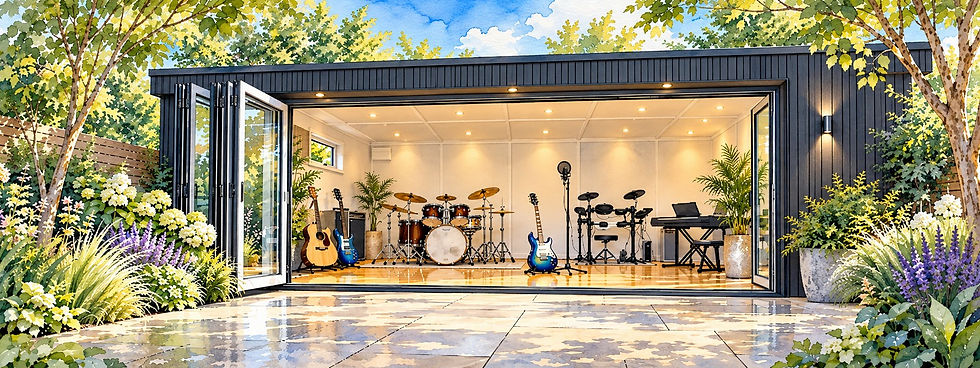
Garden Music Rooms
Professionally Designed Garden Music Rooms and Soundproof Garden Studios for Practice, Recording and Production
A garden music room gives you a dedicated place to practise, record, rehearse or produce music without taking over space inside the house.
From a compact practice room to a larger soundproof garden studio, the building can be designed around the instruments you play, the equipment you use and the level of sound control you need.
At APN Garden Rooms, you can choose from professionally designed garden room layouts and use one as the starting point for your own music space.
Each design can be purchased as a Complete Design & Technical Plan Pack, giving you the drawings and technical information needed to move from idea to construction.
Why Create a Garden Music Room?
A dedicated garden music room gives you somewhere permanent to play, practise and create.
Instead of repeatedly setting up equipment in a bedroom or living room, everything can remain in place and ready to use.
A garden music room can be designed for:
-
Guitar
-
Piano
-
Drums
-
Keyboard
-
Vocals
-
Brass and woodwind
-
Band rehearsal
-
Music production
-
Recording
-
Mixing
-
Podcasting
-
Voiceover work
-
DJ equipment
-
Music teaching
The room can be planned around the way you actually make music rather than trying to adapt a standard garden room afterwards.
Soundproof Garden Studios
A soundproof garden studio requires considerably more thought than a normal insulated garden room.
The objective is to reduce the amount of sound travelling between the room and the surrounding garden.
This may involve:
-
Dense acoustic insulation
-
Multiple layers of board
-
Independent wall linings
-
Resilient channels
-
Isolated ceilings
-
Acoustic doors
-
Specialist glazing
-
Sealed service penetrations
-
Isolated or floating floor systems
-
Acoustic ventilation
The level of construction required depends on the instruments being played and how much sound reduction is needed.
A drummer or amplified band will generally require a much more substantial specification than someone using the room for piano practice or music production.
Soundproofing and Acoustic Treatment
Soundproofing and acoustic treatment are not the same thing.
Soundproofing is concerned with reducing noise passing into or out of the building.
Acoustic treatment controls how sound behaves inside the room.
A recording room may therefore need both.
Internal acoustic treatment can include:
-
Acoustic wall panels
-
Ceiling absorbers
-
Bass traps
-
Diffusers
-
Soft furnishings
-
Specialist acoustic finishes
A room can sound excellent internally while still allowing significant noise to escape if the building envelope has not been designed correctly.
Garden Music Practice Rooms
A dedicated practice room can be one of the simplest uses for a music studio garden room.
It allows instruments to remain set up and provides separation from everyday household activity.
Important considerations include:
-
Instrument positions
-
Clear floor space
-
Music stands
-
Amplifiers
-
Storage
-
Electrical sockets
-
Lighting
-
Heating
-
Ventilation
-
Sound control
Planning these requirements before construction makes the finished room far more practical.
Garden Recording Studios
A garden room music studio intended for recording needs a more detailed layout.
The room may need space for:
-
Microphones
-
Studio monitors
-
Recording equipment
-
Mixing desk
-
Computer workstation
-
Equipment racks
-
Instruments
-
Acoustic panels
-
Storage
-
Cabling
The position of speakers, listening position and room proportions can also affect the way the studio performs acoustically.
For higher specification recording studios, specialist acoustic advice may be required.
Garden Music Production Rooms
Not every music room needs to accommodate live instruments.
A garden studio can work extremely well as a dedicated music production environment.
A production room could include:
-
Large desk
-
Studio monitors
-
Computer equipment
-
MIDI keyboards
-
Synthesizers
-
Mixing equipment
-
Equipment racks
-
Storage
-
Acoustic treatment
-
Feature lighting
Because production equipment can involve numerous cables and power supplies, electrical and data requirements should be considered before the room is built.
Wall Construction for a Soundproof Garden Music Studio
Walls are one of the main routes through which sound can travel.
A higher performance wall construction may include:
-
Timber framing
-
Acoustic mineral wool
-
High density boards
-
Multiple plasterboard layers
-
Resilient channels
-
Independent inner wall framing
-
Vapour control layers
-
External sheathing
-
External cladding
The aim is generally to combine mass, isolation and absorption.
Simply filling a timber wall with insulation does not automatically create a soundproof room.

30: The Cadence
Signature Collection — £695 + VAT

31: The Veranda
Signature Collection — £695 + VAT

32: The Loggia
Signature Collection — £695 + VAT
Floor Construction
The floor also needs to suit the intended use.
This becomes particularly important where the room contains drums, amplifiers or other equipment capable of transmitting vibration.
Possible considerations include:
-
Structural loading
-
Impact noise
-
Vibration
-
Acoustic underlay
-
Rubber flooring
-
Resilient layers
-
Floating floors
The appropriate construction will depend on the level of acoustic performance required.
Acoustic Doors and Windows
Doors and glazing are often the weakest parts of an acoustic enclosure.
Large areas of standard glazing may therefore conflict with the objective of creating a highly sound controlled studio.
Depending on the project, options may include:
-
Acoustic rated doors
-
Double door arrangements
-
Acoustic door seals
-
Laminated glazing
-
Secondary glazing
-
Reduced areas of glazing
The design needs to balance sound control with natural light and appearance.
Ventilation Without Compromising Sound Control
A well insulated and sound controlled garden music room still needs fresh air.
Simply installing an ordinary wall vent can create a direct path for sound to escape.
Possible solutions include:
-
Acoustic vents
-
Sound attenuators
-
Silenced ductwork
-
Mechanical ventilation
-
Indirect air paths
Ventilation should therefore form part of the acoustic strategy from the beginning.
Heating and Cooling
Music studios can become warm quickly because of people, lighting and electronic equipment.
Heating and cooling may include:
-
Electric panel heating
-
Low noise air conditioning
-
Mechanical ventilation
-
Background heating
Any mechanical equipment should be selected with operating noise in mind, particularly in recording environments.
Electrical and Data Requirements
A garden music studio can need considerably more electrical provision than a normal garden room.
Requirements might include:
-
Multiple socket outlets
-
Dedicated circuits
-
Computer equipment
-
Amplifiers
-
Recording equipment
-
USB charging
-
Data cabling
-
Audio cabling
-
Equipment racks
-
Specialist lighting
-
External power
Electrical routes should be carefully planned because unnecessary penetrations through acoustic walls can affect sound isolation.
Lighting for a Garden Music Room
Lighting can be both practical and atmospheric.
Possible options include:
-
Dimmable downlights
-
Desk lighting
-
LED strip lighting
-
Feature wall lighting
-
Low level lighting
-
Recording indicators
-
External lighting
Different lighting zones allow the room to change from a practical rehearsal environment to a more relaxed recording or production space.
Small Garden Music Rooms
A music room does not necessarily need to be large.
A small garden music room can work extremely well for:
-
Guitar practice
-
Keyboard
-
Vocals
-
Music production
-
Mixing
-
Podcasting
-
Solo recording
Compact rooms simply require more careful planning of equipment, furniture and storage.
Larger Rehearsal Rooms
A larger studio may be needed where several musicians will use the room together.
A rehearsal space may need to accommodate:
-
Drum kit
-
Amplifiers
-
Keyboards
-
Several musicians
-
PA equipment
-
Microphones
-
Storage
-
Seating
The greater the number of musicians and the higher the sound levels, the more important acoustic separation, ventilation and room size become.
Garden Music Studio Cost
The garden music studio cost depends heavily on the level of specification.
A standard insulated garden room suitable for quiet practice may cost significantly less to construct than a high performance recording or rehearsal studio.
Factors affecting a soundproof garden studio price include:
-
Building size
-
Foundation type
-
Wall construction
-
Ceiling construction
-
Floor isolation
-
Acoustic doors
-
Specialist glazing
-
Ventilation
-
Electrical systems
-
Acoustic treatment
-
Internal finishes
For this reason, there is no single specification that suits every garden music room.
The sensible starting point is to establish what the room will be used for and how much acoustic separation is genuinely required.
Where Should a Garden Music Room Be Positioned?
Position within the garden can help reduce potential noise issues.
Consider:
-
Distance from neighbouring houses
-
Position of neighbouring bedrooms
-
Boundaries
-
Existing walls and planting
-
Orientation of doors
-
Window positions
-
Distance from the main house
-
Access
-
Electrical supply
Where possible, it can make sense to position the least acoustically sensitive side of the building towards neighbouring properties.
Do Garden Music Rooms Need Planning Permission?
Many garden rooms may potentially be constructed under permitted development rights, but this should not simply be assumed.
The planning position can depend on:
-
Building height
-
Position within the garden
-
Distance from boundaries
-
Amount of garden occupied
-
Listed building status
-
Conservation areas
-
Previous planning conditions
-
Removal of permitted development rights
-
Intended use
A domestic music room used as part of the enjoyment of the house is different from a studio being operated as a separate commercial premises.
Noise and intensity of use can also become relevant where the proposed use may affect neighbouring properties.
Do Garden Music Rooms Need Building Regulations?
Whether Building Regulations approval is required depends on the building's size, location, construction and use.
Relevant considerations can include:
-
Structure
-
Fire safety
-
Insulation
-
Ventilation
-
Electrical installation
-
Buildings close to boundaries
-
Specialist acoustic construction
Where Building Regulations apply, the technical design should demonstrate compliance with the relevant requirements.
Building a Garden Music Room
There are several ways to create a garden music studio.
You could:
-
Buy a complete installed studio
-
Use a specialist acoustic studio company
-
Employ a local builder
-
Appoint an acoustic consultant
-
Manage the construction yourself
APN Garden Rooms offers another route.
You can purchase the design and technical information first and then decide who you want to build it.
For more specialist soundproof garden studios, an acoustic consultant can be brought into the project where a defined level of sound reduction is required.
What Is Included in an APN Garden Music Room Plan Pack?
Our Complete Design & Technical Plan Pack provides professionally prepared drawings and construction information for the garden room design you choose.
The pack gives you and your builder a clear basis from which to price and construct the building.
Optional Soundproof Specification Pack
For homeowners who need a higher level of acoustic performance, we can also prepare a separate Soundproof Specification Pack at additional cost.
This can set out the recommended construction build ups and key acoustic details for the:
-
Walls
-
Floor
-
Roof and ceiling
-
Doors
-
Glazing
-
Service penetrations
-
Ventilation
-
Acoustic seals
-
Resilient layers
-
Internal acoustic treatment strategy
The specification would be developed around the intended use of the room, whether that is instrument practice, drums, music production, recording or rehearsal.
Where a defined acoustic performance is required, specialist acoustic consultancy may still be recommended.
Choose a Garden Music Room Design
Our collection includes designs suitable for:
-
Garden music rooms
-
Soundproof garden studios
-
Instrument practice rooms
-
Music production studios
-
Recording studios
-
Small music rooms
-
Larger rehearsal rooms
-
Multi purpose garden studios
Choose the design closest to what you need and use it as the starting point for your project.
Build More Garden Room for Your Budget
At APN Garden Rooms, we separate design from construction.
Instead of buying a complete turnkey garden room from one supplier, you can purchase a professionally prepared design and technical plan pack and then obtain quotations from builders or manage the construction yourself.
This gives you greater control over:
-
Who builds your garden room
-
What materials are used
-
How much you spend
-
Which products you choose
-
When the work is carried out
Depending on the specification, contractor and way the project is managed, this approach can potentially produce savings of 40% to 50% compared with some turnkey garden room packages.